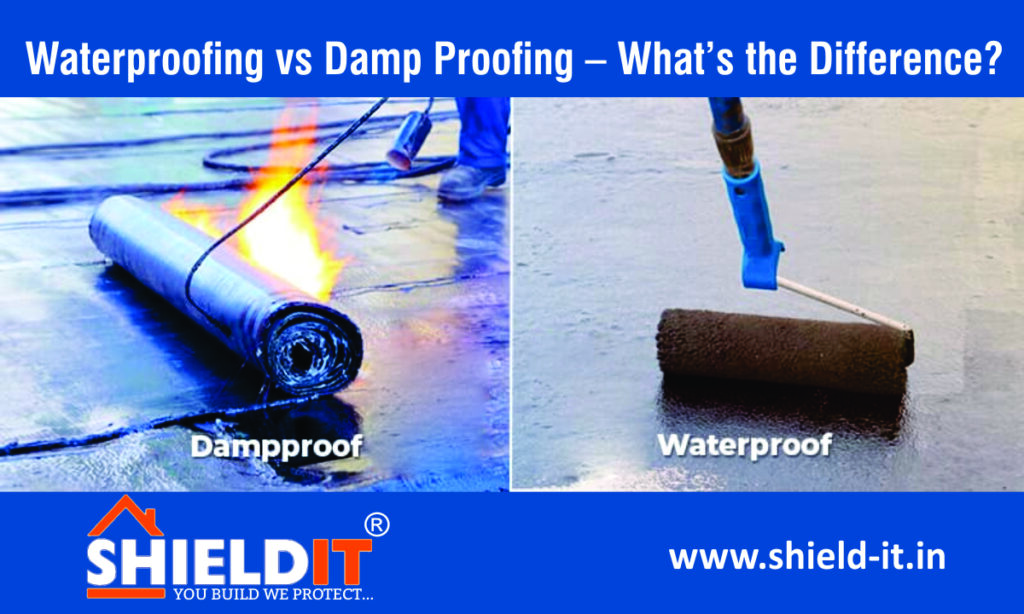
When it comes to protecting a building from moisture damage, two terms are often used interchangeably—waterproofing and damp proofing. While both aim to control moisture, they are not the same. Understanding the difference is important, especially for property owners in Delhi NCR, where varying weather conditions can lead to serious water-related issues.
Choosing the right solution at the right time can save you from structural damage, health risks, and repeated repair costs. Let’s break it down in a simple and practical way.
What is Damp Proofing?
Damp proofing is a method used to control moisture movement through walls and floors, mainly to prevent dampness caused by ground moisture or humidity. It acts as a barrier that slows down or resists moisture but does not completely block water under pressure.
Where Damp Proofing is Used:
- Internal walls
- Floors at ground level
- Foundations (basic protection)
- Plaster surfaces
Common Damp Proofing Methods:
- Application of damp-proof coatings
- Use of bitumen-based layers
- Damp-proof courses (DPC) in walls
Key Purpose:
Damp proofing is mainly used to reduce moisture absorption, not to stop active water leakage.
What is Waterproofing?
Waterproofing is a more advanced and comprehensive solution. It is designed to completely prevent water from penetrating a surface, even under pressure. This makes it suitable for areas exposed to heavy rain, water storage, or continuous moisture.
Where Waterproofing is Used:
- Terraces and roofs
- Bathrooms and kitchens
- Basements
- Exterior walls
- Water tanks and swimming pools
Common Waterproofing Methods:
- Liquid membrane coatings
- Polyurethane waterproofing
- Cementitious waterproofing
- Injection grouting for cracks
Key Purpose:
Waterproofing creates a strong, watertight barrier that protects the structure from leakage and seepage.
Key Differences Between Waterproofing and Damp Proofing
1. Level of Protection
Damp proofing offers basic resistance to moisture, while waterproofing provides complete protection against water entry.
2. Water Pressure Handling
Damp proofing cannot withstand water pressure. If water accumulates or flows, it may fail.
Waterproofing is designed to handle hydrostatic pressure, making it effective in areas like basements and terraces.
3. Application Areas
Damp proofing is suitable for low-moisture areas, whereas waterproofing is essential for high-exposure zones.
4. Durability
Damp proofing solutions may wear out faster, especially in harsh weather.
Waterproofing systems are long-lasting and built to withstand environmental stress.
5. Cost Difference
Damp proofing is generally less expensive because it uses simpler materials and techniques.
Waterproofing costs more upfront but provides better long-term value by preventing major damage.
Why the Difference Matters in Delhi NCR
In Delhi NCR, buildings face a mix of challenges:
- Intense summer heat causing cracks
- Heavy monsoon rains leading to seepage
- High humidity levels creating damp conditions
Because of this, relying only on damp proofing may not be enough in many cases. Areas exposed to rain or water accumulation require proper waterproofing to avoid long-term issues.
When Should You Choose Damp Proofing?
Damp proofing works best in situations where moisture exposure is limited and controlled.
Suitable Scenarios:
- Preventing rising damp from the ground
- Protecting internal walls from humidity
- Basic protection in new construction
- Areas without direct water exposure
It’s a good starting point but not a complete solution for water-related problems.
When is Waterproofing the Better Choice?
Waterproofing is essential when your property is exposed to direct or heavy water contact.
Recommended For:
- Terrace and roof protection
- Basement leak prevention
- Bathrooms and wet areas
- External walls exposed to rain
- Repairing active leakage issues
If you already see signs like seepage, cracks, or leakage, waterproofing is the more reliable solution.
Can Both Be Used Together?
Yes, in many modern constructions, damp proofing and waterproofing are used together for better protection.
For example:
- Damp proofing may be applied at the foundation level
- Waterproofing is used for terraces and exposed areas
This combination ensures both internal moisture control and external water resistance.
Common Mistakes to Avoid
1. Using Damp Proofing for Leakage Problems
Damp proofing cannot stop active leaks. Using it in such cases will only provide temporary relief.
2. Ignoring Early Signs of Water Damage
Small damp patches can turn into major leakage issues if not addressed properly.
3. Choosing Low-Cost Solutions Without Understanding the Need
Using the wrong method to save money often leads to higher repair costs later.
Long-Term Impact on Your Property
Choosing the right method affects not just your walls but the entire structure.
With Proper Waterproofing:
- Stronger and more durable building
- Lower maintenance costs
- Better indoor air quality
- Higher property value
With Incorrect Treatment:
- Recurring leakage
- Weakening of concrete and steel
- Mold and health issues
- Frequent repair expenses
Final Thoughts
Waterproofing and damp proofing may sound similar, but their purpose and effectiveness are very different. Damp proofing is suitable for controlling minor moisture, while Waterproofing Company in DELHI NCR is essential for complete protection against water intrusion.
For property owners in Delhi NCR, understanding this difference is key to making the right investment. Instead of choosing based only on cost, focus on the actual problem your property is facing.
If you’re dealing with leakage or planning construction, selecting the right solution at the right time will ensure long-term safety, durability, and peace of mind.